
Is a Pylon Sign Right for Your Business Location?
A pylon sign can make a hard-to-see business easier to find, especially when the building sits back from the road or shares a property with other tenants. But height alone does not make it a smart investment. The right choice depends on what drivers can actually see, where they can turn, what local rules allow and what the installation will require.
Before choosing a design, evaluate the location itself. A sign that looks impressive on a rendering may do little for a driveway hidden around a curve or a property where freestanding signage is restricted.
Start with the visibility problem you need to solve
An elevated freestanding sign typically places a display on one or more structural supports, separate from the building. That elevation can help identify businesses beyond parked vehicles, landscaping or other low-level obstructions.
Compare that function with the alternatives rather than assuming taller is better.
| Sign format | Location where it may fit | Main limitation to check |
|---|---|---|
| Elevated freestanding sign | Building set back from a road or a property with several tenants | Height restrictions, structural requirements and placement |
| Monument sign | Entrance where a lower display remains visible | Landscaping or vehicles may block the message |
| Building-mounted sign | Storefront facing approaching customers | Building orientation and distance from the road |
| On-site directional sign | Property with multiple driveways or buildings | Usually helps navigation after customers reach the property |
The strongest case for a pylon sign is a specific visibility gap: customers pass the property because they cannot identify it early enough. If the storefront already faces a slow-moving street with clear sightlines, a building-mounted sign may solve the problem more directly.
Distinguish identification from advertising, too. Helping someone recognize your entrance is a different job from communicating a promotion. Trying to do both with a crowded display can weaken the sign’s primary purpose.
Assess the site from a driver’s perspective
Check both approaches, not just the view from your parking lot
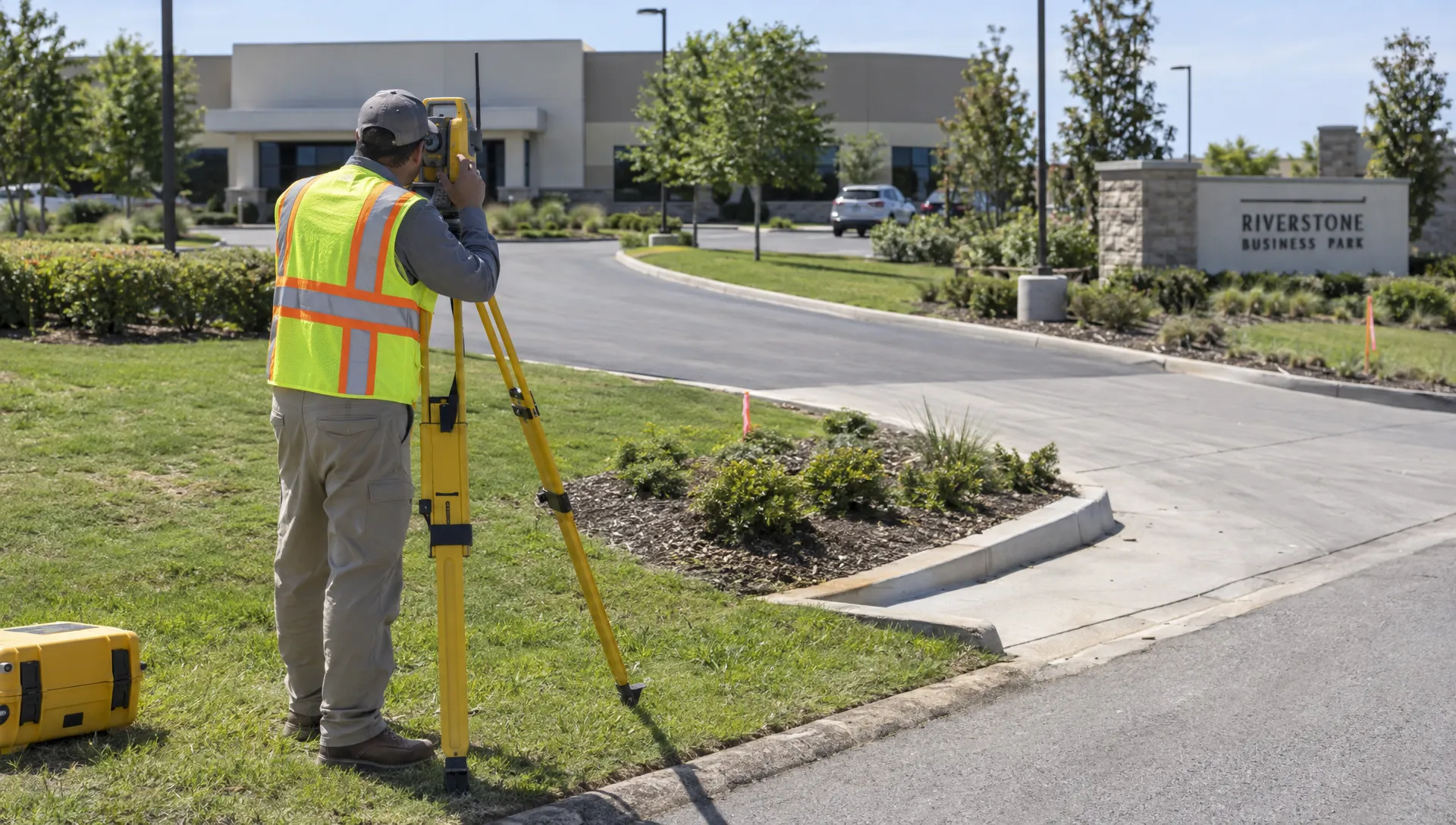
Review the property from each direction customers use. Observe from safe, lawful locations or have a passenger document the approach. Do not take photos while driving.
Look for trees, neighboring signs, utility poles, parked trucks and changes in road elevation. Consider seasonal conditions as well: a clear winter view may disappear when trees leaf out.
A pylon sign is useful only if its message becomes visible early enough for the intended decision. A driver who recognizes the business after passing the driveway still has a navigation problem.
Higher traffic speeds generally leave less viewing time, so prioritize a short, recognizable message. There is no single height or letter size that works for every road. Viewing distance, contrast, obstructions and local limits all affect the design.
Make sure visibility leads to a usable entrance
A prominent display cannot fix every access issue. A median may prevent left turns, a shared driveway may be hard to distinguish or the entrance may sit beyond the business itself.
Walk through the customer’s route from first recognition to parking. Determine whether the property needs advance identification, entrance identification or additional directions within the lot.
Keep proposed supports and landscaping clear of required visibility areas near driveways and intersections. These areas, sometimes called sight triangles, help preserve views between drivers, pedestrians and cyclists. The applicable dimensions and restrictions come from the relevant jurisdiction.
Check pylon sign rules before committing to a design
A neighboring business’s sign is not proof that you can install the same thing. Its approval may involve different zoning, an older permit or a different property classification.
The U.S. Small Business Administration’s location guidance identifies zoning as a consideration when choosing business premises. For signage, start with the local planning or building department and confirm which authorities have jurisdiction.
Ask about permitted sign types, maximum height, sign area, setbacks, lighting and the number of freestanding displays allowed. Confirm how height and area are measured, especially on sloped sites or multi-face structures. Electronic displays can have additional rules if you are considering one.
Proximity to certain highways may also trigger state outdoor advertising requirements. Do not assume a local permit is the only approval needed.
For leased premises, obtain written landlord approval and review sign rights before ordering fabrication. A shared shopping center may already allocate display space through its lease terms or approved sign plan. Treat legal permission and landlord permission as separate checks.
Compare the full installed cost, not just the display
Understand what the site adds to the quote
The price of a pylon sign depends on more than its visible face. Height, display area, structural design, illumination and ground conditions can all change the scope.
Ask for a proposal that identifies what is included in design, fabrication, permitting and installation. Clarify responsibility for structural engineering, excavation, foundations, electrical work, lifting equipment and restoration of disturbed surfaces. Some items may be allowances or exclusions rather than fixed costs.
Underground utilities can affect where supports and electrical routes can go. Follow the applicable 811 process before excavation, and determine whether private utility locating is also needed. Do not assume a seemingly open patch of landscaping is free of buried services.
Account for maintenance and future changes
Include electricity, cleaning, lighting repairs, access equipment and eventual face replacement in the ownership budget. Even efficient lighting needs service access, and elevated equipment can be harder to reach than a storefront display.
For multi-tenant properties, establish who pays for tenant panel changes and who maintains the shared structure. Review access rights, removal obligations and ownership at the end of a lease.
Compare alternatives using the same scope. A low fabrication price is not necessarily a lower project cost if foundations, electrical connections and permitting appear elsewhere in the budget.
Design for recognition before adding detail
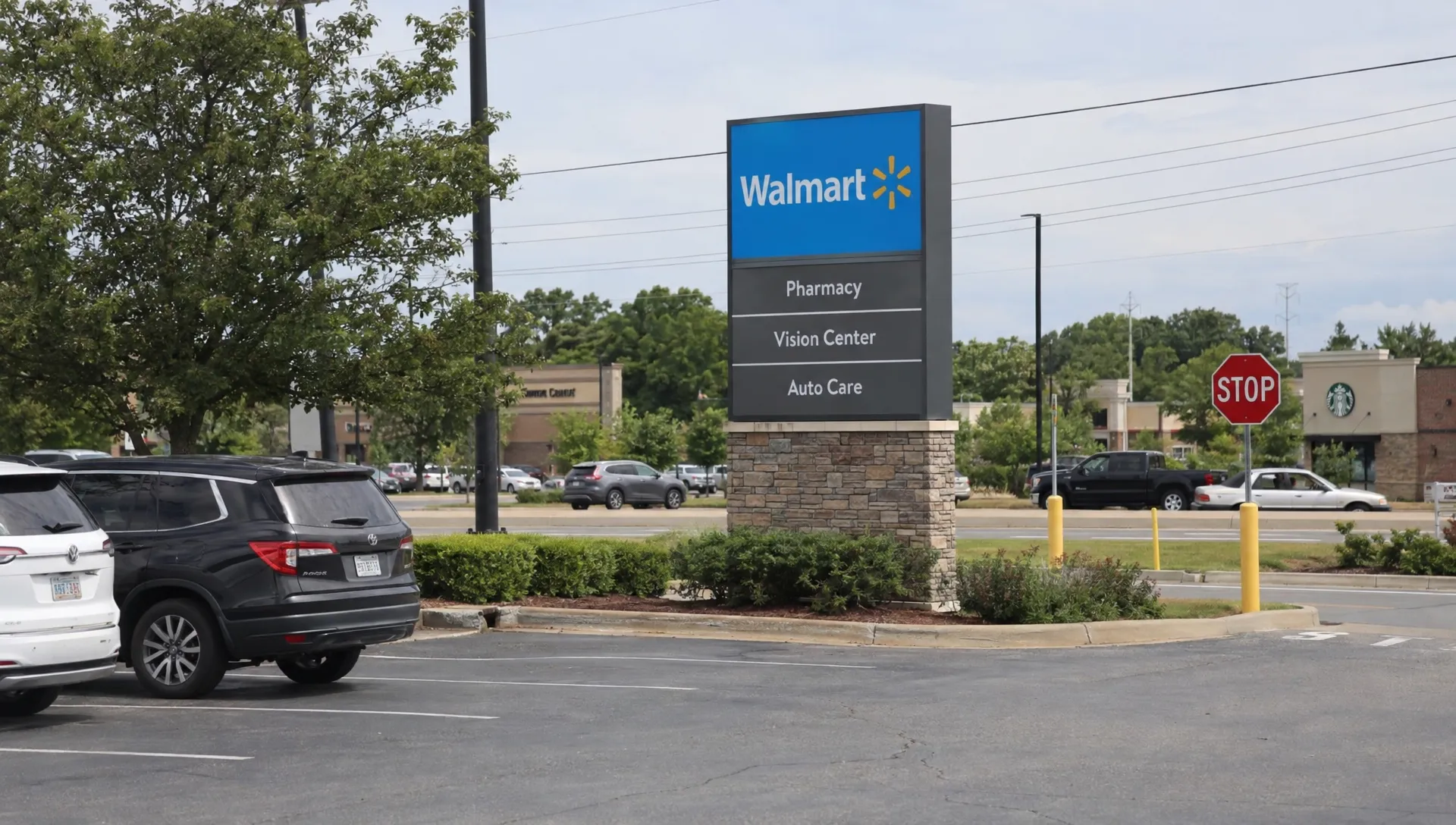
Once the location and approval path look workable, decide what the driver needs to recognize first. For a single business, that may be the name and a familiar logo. For a shopping center, it may be the property identity and a limited set of tenant panels.
Avoid turning the display into a brochure. Phone numbers, long service lists and several competing messages can be difficult to absorb from a moving vehicle. Evaluate artwork at a realistic viewing scale, not only as a large image on a monitor.
If an illuminated cabinet is part of the concept, pan-faced sign options may be relevant to the face design. That component choice is separate from deciding whether an elevated structure belongs on the site.
For a pylon sign to work after dark, the message needs to remain readable without excessive brightness or glare. Review illumination limits, nearby residences and operating hours before selecting lighting. Ask how the proposed display will be serviced, too, so visual decisions do not create avoidable maintenance difficulties.
Make the decision: proceed, revise or choose another format
Use the site assessment to identify unresolved issues before approving production.
| Decision | Conditions that support it | Next step |
|---|---|---|
| Proceed with planning | A clear roadside visibility problem, a plausible permitted location and owner approval | Request a site-specific concept and detailed scope |
| Revise the approach | Visibility is promising but access, landscaping or tenant layout needs work | Resolve those constraints before finalizing the design |
| Choose another format | A lower or building-mounted display meets the need more simply | Compare monument, storefront or directional options |
| Pause | Sign rights, approvals or construction feasibility remain uncertain | Obtain the missing information before committing |
For example, a business behind a deep parking lot may benefit from elevated identification when vehicles routinely block its building sign. The same approach may add little to a storefront directly facing a walkable commercial street.
A pylon sign is a stronger candidate when visibility, access, permission and budget all support it. If one of those remains unresolved, establish that answer before spending time refining colors and cabinet shapes.
To prepare for a consultation, gather site photos from both road approaches, approximate property and driveway locations, existing sign information, lease restrictions and any available survey. These materials support an initial assessment, although they do not replace professional site verification.
Frequently asked questions
What is the difference between a pylon and a monument sign? A pylon typically elevates the display on structural supports, while a monument sign generally presents a lower, ground-oriented form. Terminology and legal classifications vary, so check the local code rather than relying only on the product name.
How tall should a pylon sign be? There is no universal ideal height. The appropriate height depends on permitted limits, road elevation, viewing angles, obstructions and the distance from which customers need to recognize the business. The tallest allowed option is not automatically the most effective.
Can an existing structure be reused? Possibly, but its condition, foundation, engineering documentation and permit status need review. New faces, cabinets or lighting can change loads and code requirements. Reuse should be verified rather than assumed from the structure’s appearance.
Does a roadside sign replace storefront signage? Usually, they serve different purposes. Roadside identification helps customers locate the property, while storefront signage confirms which building or entrance belongs to the business. Multi-tenant sites may also need directions within the property.
Discuss your location before choosing the format
Bring your visibility problem, site photos and known restrictions to Showstopper Signs to discuss a custom signage approach. The team works with businesses from design and consultation through fabrication and installation.
Ask which format best addresses your location and what needs verification before a quote can be finalized. The goal is a sign customers can recognize and use, with a project scope you understand before moving forward.