
How to Choose a Fleet Graphics Provider for Your Business
Choosing a fleet graphics provider means choosing more than someone who can print a logo on a van. You need a partner who can translate your brand across different vehicles, install the right materials and keep the project moving without unnecessary downtime. An attractive portfolio matters, but it does not tell you how a company handles surface preparation, replacement panels or warranty claims.
Compare providers on documented scope, relevant experience and installation standards before comparing price. The questions below will help you separate a well-managed project from a quote that leaves important details unresolved.
Define your fleet and operating requirements
Start with a short project brief that every prospective provider receives. Without one, you may end up comparing a full wrap from one company with basic door lettering from another.
Include the information that affects design, production and scheduling:
- Vehicle inventory: Year, make, model, body configuration and photos of each vehicle.
- Vehicle condition: Existing graphics, damaged paint, rust, repairs or aftermarket equipment.
- Brand requirements: Logo files, brand colors, required wording and contact details.
- Operating conditions: Typical routes, outdoor storage, washing practices and exposure to demanding environments.
- Business constraints: Installation locations, vehicle availability, lease restrictions and planned replacements.
Explain what the graphics need to accomplish. A service company may prioritize a recognizable name and phone number, while a delivery business may need consistent identification across several vehicle types.
A clear brief helps a fleet graphics provider recommend an appropriate scope rather than simply quoting the largest printable area. It also gives you a written baseline for evaluating proposals and any later changes.
Evaluate relevant work, not just attractive photos
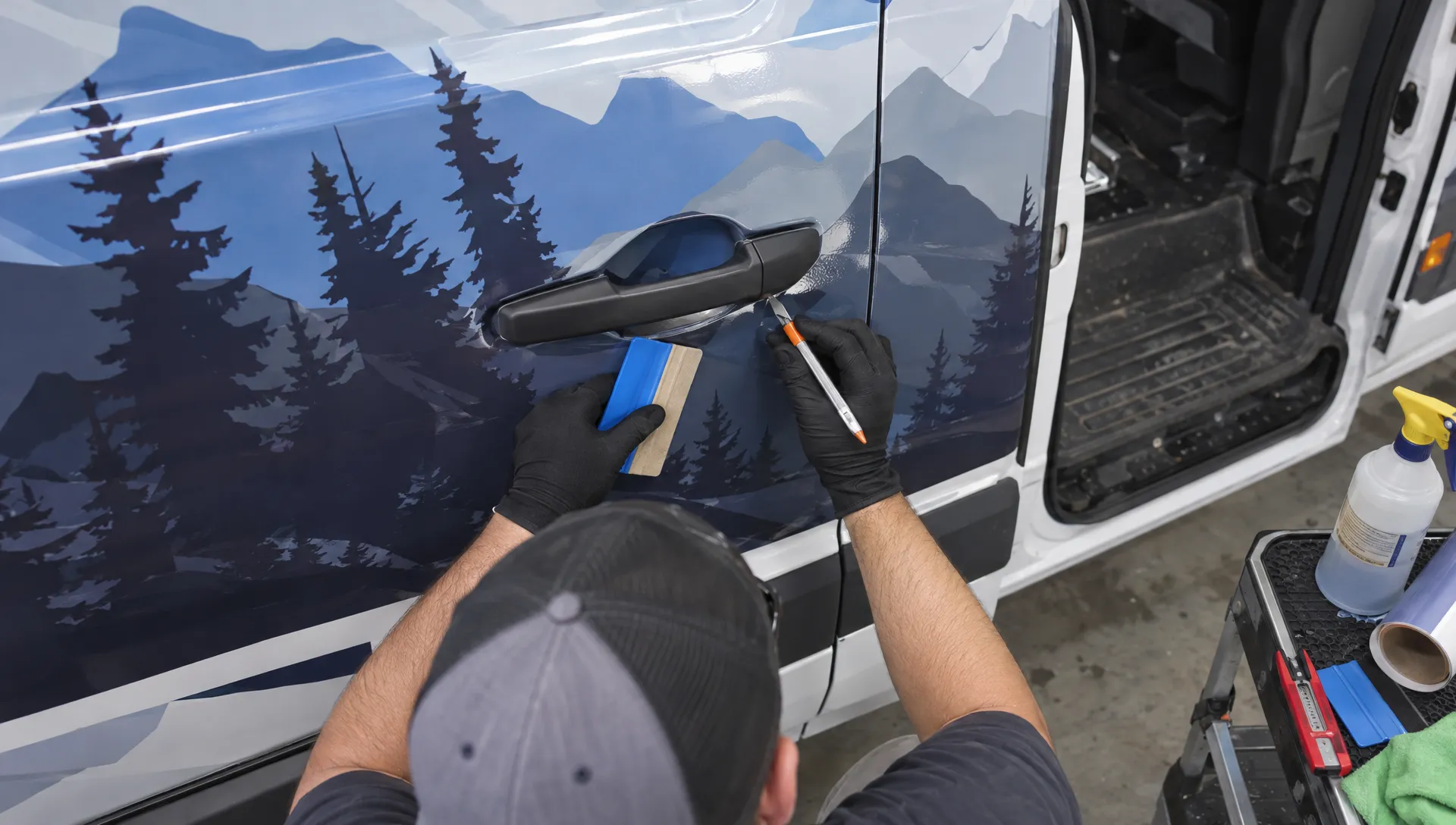
Look for projects that resemble your vehicles and operating needs. Wrapping a flat trailer side involves different challenges from working around a van’s recessed panels, handles and compound curves.
Ask to see close-up photos of edges, seams, door openings and recessed areas, not only wide shots taken immediately after installation. If available, photos of older work can help you assess how previous projects have held up, though maintenance and operating conditions also affect appearance.
Request a reference from a business with a comparable fleet. Useful questions include whether vehicles were returned on schedule, how accurately the final invoice matched the approved scope and how the provider handled corrections.
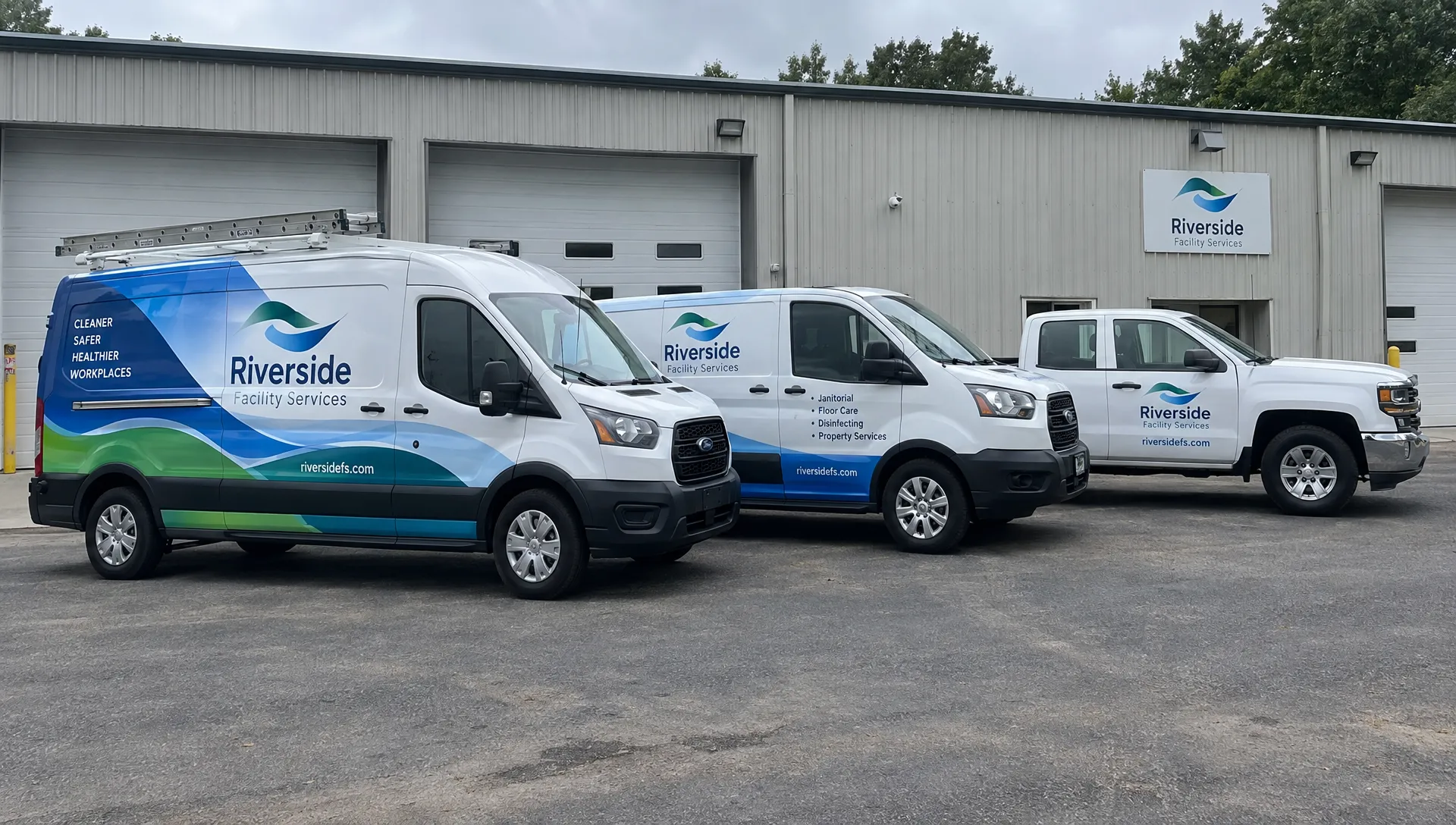
For fleet graphics, repeatability matters as much as the first finished vehicle. Ask whether the provider has completed multiple units using the same approved design and how it manages differences between vehicle models.
Also establish who performs each stage. In-house production and subcontracted installation can both work, but you should know who controls quality and who is accountable if something needs attention.
Ask for specific materials and installation standards
Verify the film and laminate specification
A proposal that says only “premium vinyl” does not give you enough information to compare materials. Request the manufacturer, product series and any protective laminate, along with confirmation that the combination is appropriate for the intended application.
Cast vinyl is commonly specified for complex vehicle contours, but the label alone does not establish suitability. The exact product’s technical requirements matter, including approved surfaces, application limits and compatibility with the laminate.
Ask the provider to explain its recommendation for your fleet graphics in terms of vehicle shape, expected service period and operating conditions. A flat-sided trailer and a deeply recessed van panel may not call for the same material system.
Understand preparation and quality checks
Ask how vehicles must arrive and what preparation the installer performs. The process should address surface contamination, existing graphics and any paint condition that could interfere with adhesion or removal.
A wrap is not a repair for failing paint. Have the provider document concerns before work begins and explain whether bodywork or another remedy is needed first.
Discuss the installation environment, edge finishing and final inspection. Where the selected film requires post-heating or other specific application steps, ask how the installer follows the manufacturer’s instructions. You are looking for a repeatable process, not a promise that experience makes documentation unnecessary.
Review the design process and brand controls
Good vehicle design has to work around physical interruptions. Door gaps, handles, wheel arches and equipment can split words or hide contact details. A layout that looks balanced on a flat screen may not work on the actual vehicle.
Ask whether proofs show each relevant side of the correct body style. Confirm how the provider checks measurements and accounts for accessories or modifications that a standard template may miss.
Your approval should cover wording, logo placement, coverage areas and any necessary differences between models. Discuss color expectations before production as well. Screen displays and print materials do not reproduce color identically, so ask whether a physical sample is appropriate when brand color is critical.
The design system for fleet graphics should also connect with the rest of your business. If customers recognize your storefront, your vehicles should reinforce that identity rather than introduce an unrelated look. These principles for choosing custom signage that fits your brand can help you align the two.
Finally, clarify revision allowances, proof approval responsibilities and ownership or future access to the production artwork.
Compare fleet graphics quotes on equal terms
The lowest total is meaningful only when the included work is comparable. Request itemized proposals that distinguish design, materials, preparation and installation rather than treating everything as an unexplained package.
Use the following questions to identify missing scope:
| Quote item | What to confirm | Why it matters |
|---|---|---|
| Coverage | Full wrap, partial wrap, lettering or spot graphics, with included panels identified | Prevents comparing different amounts of work |
| Materials | Film series and laminate, where applicable | Makes the material specification verifiable |
| Design | Included concepts, revisions and model adaptations | Reveals potential additional charges |
| Preparation | Cleaning, existing graphic removal and adhesive removal | Identifies work that may sit outside the base price |
| Installation | Location, vehicle delivery requirements and any travel charges | Clarifies logistical costs |
| Corrections | Responsibility for production errors versus approved artwork errors | Reduces disputes after printing |
| Future work | Pricing process for replacement panels and additional vehicles | Helps you plan beyond the initial order |
Ask each provider to identify exclusions in writing. Paint repair, removal of old material and changes after approval can materially alter the project, but they should not be surprises.
A useful fleet graphics quote also explains how variations will be authorized. Require approval before extra work begins, with an updated cost and schedule when the scope changes.
Avoid assuming that a more expensive proposal is automatically better. Look for a clear explanation of what the additional cost buys and whether it addresses a real requirement.
Check scheduling and responsibility across locations
A fleet project can disrupt operations even when the finished work looks excellent. Ask how the provider schedules vehicles, what must happen before an installation date is confirmed and how delays are communicated.
Distinguish installation time from total vehicle unavailability. Drop-off arrangements, preparation, production readiness and manufacturer-required conditions before service or washing can affect when a vehicle is practically available again.
If vehicles operate from several locations, establish who coordinates installers and checks finished work. Ask whether all locations receive the same approved files, material specifications and acceptance criteria.
For fleet graphics rolled out over several weeks, staged approvals can prevent one mistake from spreading across the entire order. Confirm one vehicle or body style before authorizing the next production batch.
Name a decision-maker on your side as well. A provider cannot resolve conflicting feedback efficiently if several departments approve different versions. One contact should consolidate revisions, approve changes and confirm that each vehicle is ready for its appointment.
Get warranty and maintenance terms in writing
“Warrantied” is not a complete answer. Ask for the applicable documents and identify who stands behind each part of the work.
Material coverage, print or finished-graphics coverage and installation workmanship coverage may have different terms. Coverage can also depend on the specific product, exposure, application and care requirements. Do not treat a film’s advertised durability as a guarantee for the entire installed project.
Before approving fleet graphics, clarify what happens if an edge lifts, a panel is damaged or a color appears inconsistent. Ask who inspects the issue, what documentation is required and which costs may remain your responsibility. Collision damage and installation defects should not be treated as the same kind of claim.
Request written care instructions that match the installed material. Give those instructions to drivers and anyone responsible for washing the vehicles.
Discuss removal too. Ask how vehicle condition will be assessed, whether removal is quoted separately and what limitations apply to repainted or compromised surfaces. A responsible provider should explain these risks rather than promise that every removal will be damage-free.
Test the process before committing the entire fleet
For a larger order, consider starting with one representative vehicle. A pilot gives you a chance to evaluate both the finished result and the working relationship before approving the rest.
Choose a vehicle that tests the design properly. If most of your fleet consists of vans with recessed panels, a flat trailer will not answer the same installation questions.
Inspect the pilot in daylight and from normal viewing distances. Check whether the business name and key contact information are easy to identify, whether door openings interrupt important wording and whether the physical finish matches the approved scope.
A pilot fleet graphics installation also tests communication: Were issues flagged early? Were changes documented? Was the vehicle ready when promised?
After approval, request that the provider retain the agreed production specifications and document any model-specific adaptations. Confirm how future orders will reference those records and whether artwork can be supplied to you under the agreed ownership terms.
For smaller projects, the same discipline can take the form of a documented proof review and a careful final handoff rather than a separate pilot phase.
Frequently asked questions
How much should a business budget for vehicle graphics? Cost depends on vehicle size, coverage, material selection, design work, preparation and installation requirements. Request quotes against the same written scope. Include expected removal, downtime and future replacement work when comparing the overall commitment.
Is a full wrap better than a partial wrap or lettering? Not automatically. A full wrap offers more design coverage, but partial wraps or well-placed lettering may suit your message and budget. Ask providers to explain how each option would work on your actual vehicles, including visibility from the rear and sides.
How long do fleet graphics last? There is no single lifespan that applies to every installation. Film choice, surface orientation, climate, storage and maintenance all matter. Ask for an expected service period based on your use, then distinguish that estimate from the written warranty.
Should an installer have manufacturer certification? Relevant training or certification can be a useful qualification. Verify the specific credential and its relevance to the proposed work, then assess recent projects, references and documented processes. A credential does not replace a clear scope or workmanship terms.
Start with a clear project conversation
Showstopper Signs offers vehicle and fleet wraps with collaborative design, custom fabrication and professional installation. To begin comparing options, explore its custom vehicle wrap services and share your vehicle inventory, photos, brand assets and scheduling requirements.
Ask for a proposal that identifies coverage, materials, preparation, installation and applicable warranty terms. That gives you a practical basis for choosing a provider and a shared reference for managing the project.