
How to Choose Custom Signage Solutions for Your Brand
The right custom signage solutions help people notice your business, recognize your brand and find their way to your door. Choosing them takes more than picking an attractive design. Your location, viewing distance, building restrictions and maintenance budget all affect which signs will work best.
Before requesting a quote, define what each sign needs to accomplish. Then compare options against the same practical requirements. This guide walks through sign formats, materials, approvals and provider selection so you can make a more informed investment.
Start with the business problem your sign should solve
A storefront hidden behind parked cars has a different visibility problem than a busy retail space with confusing entrances. A service business working across town may need vehicle graphics more than another sign at its office.
Identify your primary goal: attracting attention from the road, identifying your entrance, explaining your services or guiding visitors once they arrive. Give each proposed sign one main job rather than trying to make it handle everything.
Next, consider the audience. Drivers need information they can understand quickly. Pedestrians can read more detail. Visitors inside a building need clear directions at the points where they make decisions.
Turn those observations into a short project statement. For example: “Help first-time customers identify our entrance from the shared parking lot after dark.” That gives a designer a clearer starting point than “We need something eye-catching.” It also helps you judge whether a proposed solution addresses the actual problem.
Compare custom signage solutions by application
Start with where customers encounter your business, then narrow the format. Several sign types may support the same brand without repeating the same message everywhere.
| Sign type | Best suited to | Key selection question |
|---|---|---|
| Dimensional letters | Building identification and reception areas | Will the letters stand out against the mounting surface? |
| Illuminated channel letters or cabinets | Storefront identification after dark | What lighting, electrical access and service access are needed? |
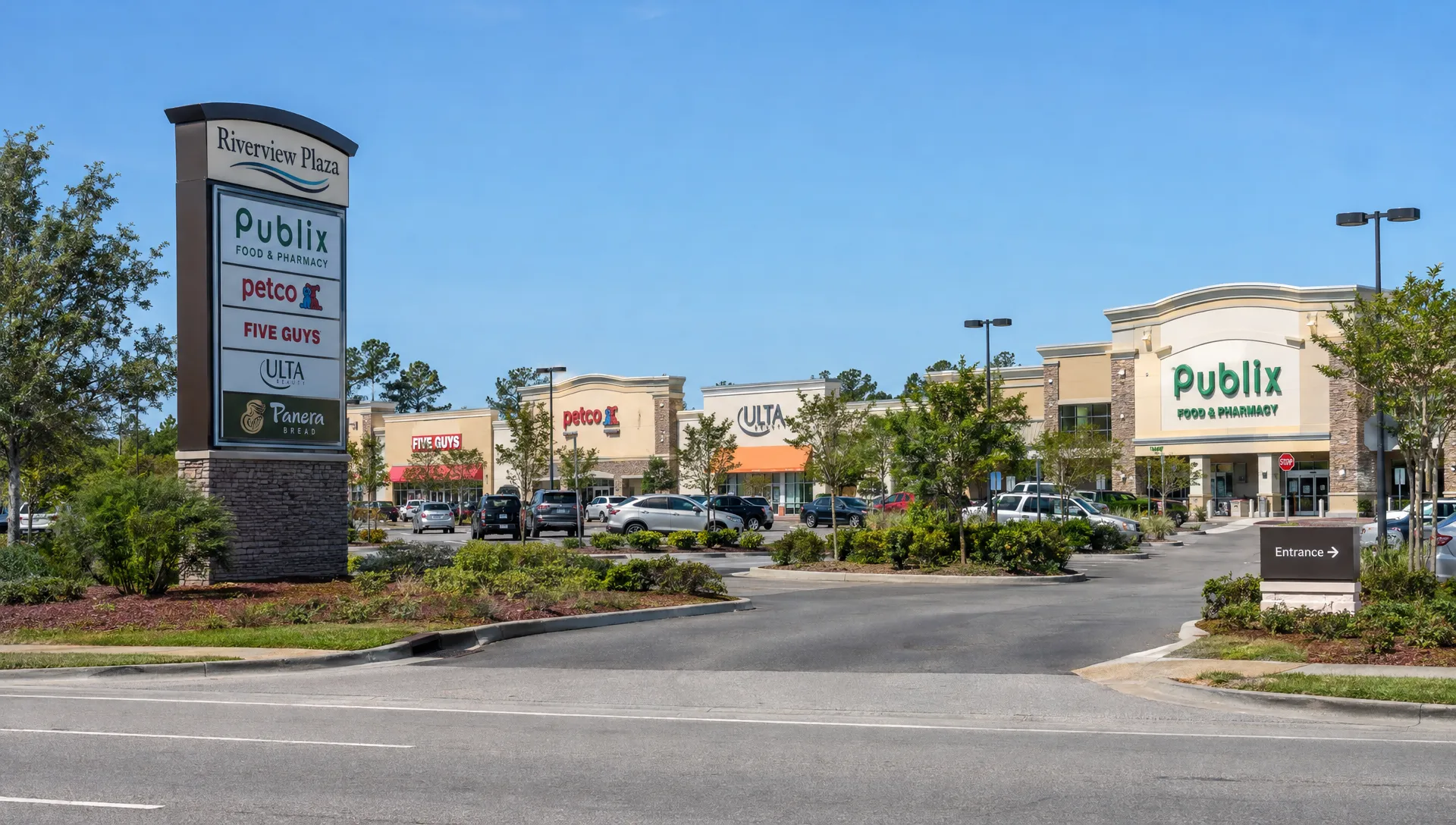
| Monument or pylon signs | Property entrances and roadside identification | Do placement, sightlines and local rules support this format? |
| Window and wall graphics | Branding, hours and supporting information | Are surface condition, visibility and removal requirements suitable? |
| Wayfinding signs | Directing visitors through buildings or sites | Where do people need help choosing a direction? |
| Banners and portable displays | Promotions, events and temporary messages | How long will the display stay up, and how will it be secured? |
| Vehicle and fleet graphics | Brand exposure during travel and at job sites | Which vehicle surfaces provide a clear, readable message? |
If your building sits back from the road, evaluate whether a pylon sign fits your business location before assuming a larger wall sign will solve the problem.
For businesses that travel to customers, custom vehicle wraps offer a different application: carrying your identity beyond your storefront. Coordinate the branding, but adapt the layout to each vehicle.
Match materials to indoor and outdoor conditions
Materials for custom signage solutions should be selected for the installation environment, not appearance alone. An indoor reception sign faces different demands than a roadside cabinet exposed to sun, rain and wind.
Outdoor signs: evaluate the complete assembly
Ask about the sign face, structural components, finishes, mounting hardware and electrical components where applicable. A durable face material does not compensate for unsuitable fasteners or a poorly prepared mounting surface.
Describe the actual exposure. Direct afternoon sunlight, coastal salt, irrigation spray and strong winds can affect material and installation choices. Ask how the proposed construction addresses those conditions and what routine care it will need.
Weather-resistant does not mean maintenance-free. Confirm how surfaces should be cleaned, how lighting can be serviced and which components may eventually need replacement.
Indoor signs: consider use as well as appearance
Reception areas may prioritize dimensional lettering and finish quality. Busy corridors need readable directions and surfaces that tolerate cleaning. Temporary promotional graphics may need to come off without creating an expensive restoration project.
For window, wall and floor graphics, ask the provider to assess the surface and recommend a compatible product. Floor graphics also require attention to suitability for foot traffic, cleaning practices and slip resistance. Avoid assuming that one adhesive or film works on every surface.
Make readability a design requirement
Effective custom signage solutions translate your brand into something people can understand at the intended distance. A logo that looks sharp on a business card may lose detail when viewed across a parking lot.
Keep the most important information dominant. For a building sign, that is often the business name. For a directional sign, it may be the destination and arrow. A vehicle graphic might prioritize the name, service category and one useful contact method.
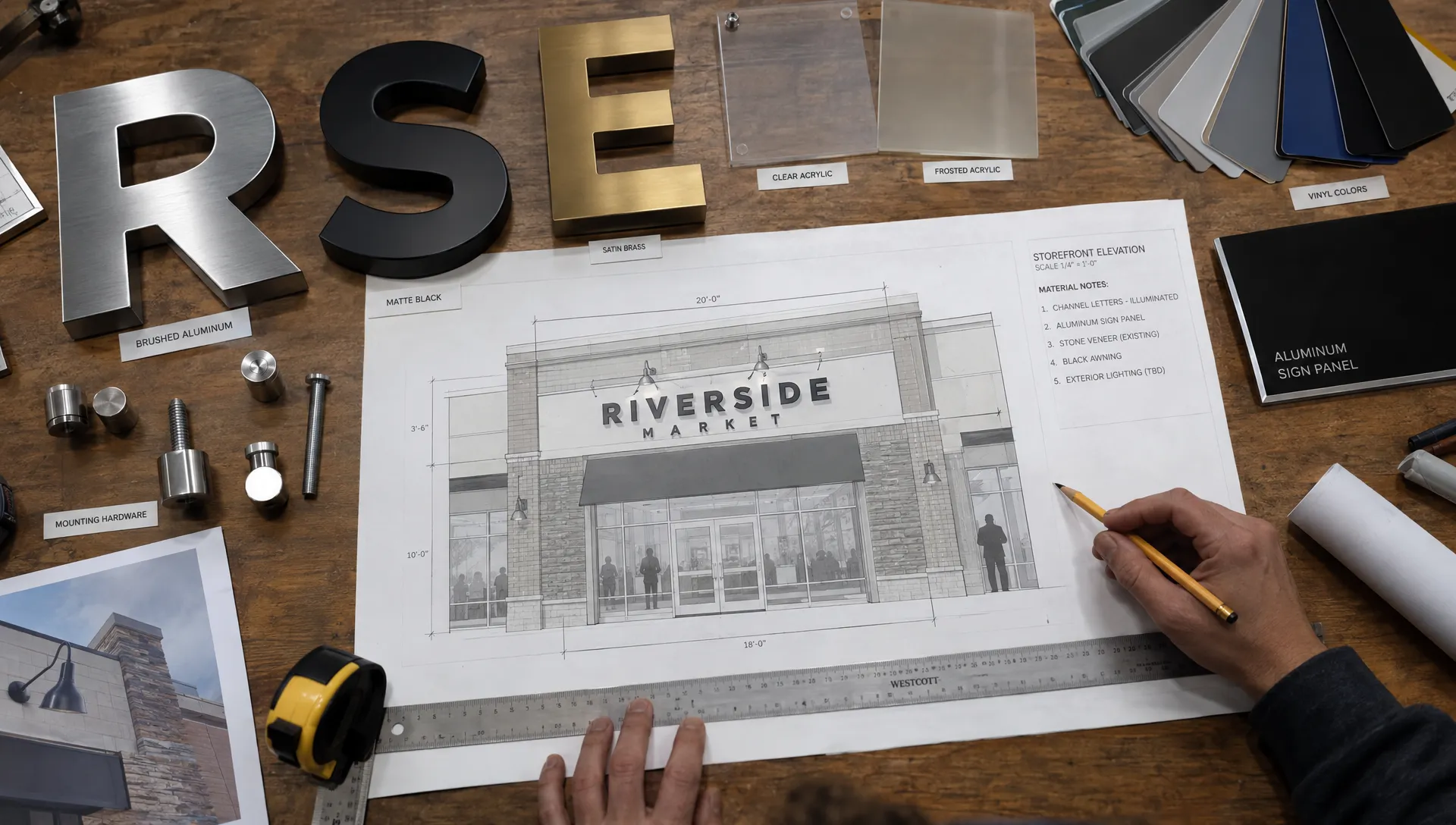
Ask to review the design in context, not only as isolated artwork on a white background. A storefront mockup can reveal weak contrast against brick, conflicts with architectural features or a sign that appears smaller than expected.
For illuminated signage, discuss nighttime appearance separately. Daytime color, nighttime brightness and surrounding light all influence visibility. Illumination should help people read the sign without overwhelming nearby tenants or conflicting with local restrictions.
Before approving a proof, check spelling, phone numbers, website addresses, colors, dimensions and placement. Request an explanation of any production changes to your logo. A proof approval should confirm the message and layout, not leave essential installation details unresolved.
Check permits, landlord rules and accessibility early
Before committing to custom signage solutions, establish what the property and local jurisdiction allow. These constraints can change the size, location, lighting or type of sign you can install.
Local approvals and property restrictions
Ask the relevant local department about sign permits and applicable rules. Depending on the project and jurisdiction, building or electrical permits may also be required. Historic districts and other designated areas can have additional requirements.
If you lease your space, review the lease and any landlord sign criteria. A property may require particular letter styles, cabinet dimensions or mounting locations even when local rules allow other options.
Clarify who prepares drawings, submits applications, pays fees and responds to requested revisions. A design proof is not a permit approval, and landlord approval does not replace municipal approval.
Accessibility requirements
Accessibility obligations depend on the sign’s purpose and location. Under the U.S. Access Board’s ADA guidance for signs, covered signs identifying permanent rooms and spaces generally have tactile and visual requirements. Other categories, such as directional signs and directories, are treated differently.
Do not assume every sign needs braille or that an attractive wayfinding package is automatically compliant. Have the applicable accessibility, mounting and local code requirements reviewed before fabrication, especially when signs identify permanent rooms or accessible routes.
Compare lifetime cost, not just the purchase price
When comparing custom signage solutions, evaluate the cost of owning and maintaining the sign as well as producing it. A lower fabrication quote can lose its advantage if it excludes installation equipment, electrical work or future service access.
Ask each provider to separate the major cost categories: design, surveys, fabrication, permitting, installation and any electrical work. Then discuss likely maintenance needs. Illuminated signs may require component servicing; graphics may eventually need removal and replacement.
Look closely at what changing your message would involve. A business expecting new hours, seasonal promotions or tenant changes may benefit from a format that allows selected elements to be updated without replacing the entire sign.
Consider a hypothetical comparison between two illuminated signs. One quote includes installation and accessible lighting components. Another covers fabrication only and leaves electrical connections unspecified. The second number is not yet a comparable project price, even if it looks lower.
Request a written scope that identifies exclusions and responsibilities. For a phased project, prioritize the signs that solve your most immediate visibility or navigation problem, then coordinate later additions around the same brand standards. This can keep the project focused without treating every possible sign as an immediate necessity.
Choose a provider with a clear project process
A provider’s portfolio helps you judge visual quality, but successful custom signage solutions also depend on coordination. Ask how the company moves a project from initial consultation through installation and final review.
Confirm responsibilities and approval stages
Find out whether a site survey is needed and what it will verify. Relevant details may include dimensions, mounting surfaces, access restrictions, existing electrical supply and installation equipment needs.
Ask who your main contact will be and how revisions are handled. Before production, establish which documents you must approve and whether changes after approval affect cost or scheduling. Also clarify who handles communication with the property manager, permitting office and electrical contractor, if needed.
Evaluate relevant experience and aftercare
Look for completed work similar to your project in scale, construction and setting. A company experienced with indoor graphics may not be the best match for a large illuminated exterior installation, and the reverse can also be true.
Request written warranty terms rather than relying on a general promise of durability. Ask what coverage applies to materials, workmanship, lighting components and installation labor. Confirm exclusions and whether a service visit carries additional charges.
Finally, ask what happens after installation: how the work is inspected, who addresses outstanding items and what cleaning or maintenance instructions you receive. These details make it easier to compare providers on service rather than presentation alone.
Prepare a useful brief before requesting a quote
A clear brief helps providers recommend custom signage solutions that fit your site and reduces avoidable revisions. You do not need to specify every material yourself, but you should supply enough information for a meaningful conversation.
Gather the following before requesting an estimate:
- Project goals: Explain who needs to see the sign, where they will view it and what action it should support.
- Brand assets: Supply vector logo files if available, brand color references, fonts and any usage guidelines.
- Required wording: Confirm business names, contact details, hours, directional messages and any necessary language versions.
- Site information: Share the address, photos, approximate dimensions and details about existing signs or mounting surfaces.
- Property requirements: Include landlord criteria and any approval information you already have.
- Installation constraints: Note access hours, parking limitations, occupied work areas and known electrical conditions.
- Budget and timing: Provide a realistic budget range, your preferred completion date and any opening or event deadline.
Treat your measurements as preliminary unless the provider confirms otherwise. Final fabrication dimensions may require a professional survey.
Ask what information is still missing before the quote can become firm. If a proposal includes allowances or assumptions, have them identified clearly. When comparing estimates, give each company the same brief and request the same scope. Otherwise, differences in price may reflect different responsibilities rather than better value.
Frequently asked questions
Which signs work best outdoors? Outdoor custom signage solutions need construction suited to their exposure, mounting conditions and intended lifespan. Dimensional letters, illuminated cabinets and freestanding signs can all be appropriate. The best choice depends on visibility needs, local rules and the site rather than a single universally superior material.
Do sign companies provide design and installation? Some manage the full project while others specialize in particular stages. Showstopper Signs offers collaborative design, custom fabrication and professional installation. For any project, confirm separately who handles surveys, permits, electrical work and other responsibilities.
How long does custom sign production take? Timing depends on design revisions, approvals, material availability, fabrication complexity and installation scheduling. Ask for a project-specific schedule that distinguishes design, permitting, production and installation. Confirm when the production timeline begins and what could change it.
Should every sign use the same layout? Keep your colors, logo treatment and overall brand identity consistent, but adapt layouts to the application. A roadside sign, reception display and vehicle wrap have different shapes and viewing conditions. Forcing one layout across all three can reduce readability.
Can I reuse an existing sign structure? Sometimes, but its condition, dimensions, electrical components and compliance need review. Replacing a sign face does not establish that the supporting structure is suitable or that the proposed alteration is permitted.
Discuss the right sign package for your business
Choose custom signage solutions around a clear goal, a realistic site assessment and a complete project scope. That gives you a stronger basis for comparing both designs and quotes.
Showstopper Signs creates commercial signage, storefront signs and vehicle wraps, with support from design and consultation through fabrication and installation. Use the quote and contact form to share your goals, location photos and brand assets so the conversation starts with what your business actually needs.